Wine Bottle 3D Mockup Template Bundle: Streamlining Your Brand Presentation Workflow
Presenting a wine product—whether a new vintage, a rebranded label, or a limited-edition release—requires more than just a good bottle. It requires a visual story that communicates quality, craftsmanship, and market positioning. The Wine Bottle 3D Mockup Template Bundle offers a practical solution for designers, marketers, and small business owners who need to showcase their labels in realistic, professional settings without the cost and complexity of a full photoshoot. This article explores how this bundle fits into real workflows, how to integrate it effectively, and what to consider for long-term use.
What the Wine Bottle 3D Mockup Template Bundle Actually Is
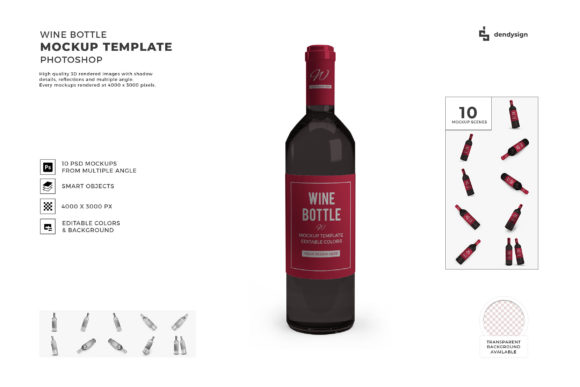
At its core, this bundle is a collection of pre-built, editable 3D scene files—typically in PSD, Sketch, or Figma format—that allow you to place your label artwork onto a realistic wine bottle model. The bundle usually includes multiple angles, lighting presets, background options, and sometimes props like glasses, corks, or wooden crates. Instead of rendering from scratch or staging a physical shoot, you simply drop your design into a smart layer, and the mockup handles the rest: reflections, shadows, bottle shape, and environment.
This is not a design tool for creating labels. It is a presentation and approval tool that comes into play after your label artwork is final or near-final. Its purpose is to bridge the gap between flat digital art and a tangible, market-ready product visualization.
Where It Fits in Your Broader Process
Understanding where this bundle belongs in your workflow prevents misuse and wasted time. It is most valuable in three distinct phases: pre-production review, client or stakeholder approval, and final marketing asset creation.
Pre-Production Review
Before committing to printing thousands of labels, seeing your design wrapped around a curved bottle surface can reveal spacing issues, color shifts, or alignment problems that are invisible in a flat mockup. The bundle’s realistic lighting and bottle geometry help you catch these issues early. Drop in your artwork, zoom into the neck and shoulder areas, and check how the label behaves on a cylindrical surface. This step alone can save significant reprint costs.
Client and Stakeholder Approval
If you are a designer working with a winery, a brand owner pitching to distributors, or a marketer presenting to internal teams, the difference between a flat label file and a 3D mockup is enormous. The bundle provides context—the bottle looks like a real product on a shelf, in a tasting room, or on a table setting. This context accelerates decision-making. Stakeholders can approve the design with confidence because they see how it will appear in the real world.
Final Marketing Asset Creation
Once the label is approved, the same mockup files become the foundation for your product shots. You can generate images for your website, social media, email campaigns, catalogs, and press releases. Because the bundle includes multiple angles and lighting setups, you can create a cohesive set of visuals without reshooting or re-rendering. This consistency strengthens brand identity across channels.
Practical Implementation Tips
Integrating the Wine Bottle 3D Mockup Template Bundle into your routine is straightforward, but a few deliberate practices will maximize its value.
Preparation: Organize Your Label Files
Before you open the mockup, ensure your label artwork is properly prepared. Use high-resolution files (300 DPI or higher), include bleed if needed, and save your design as a layered PSD or a PNG with transparency. Name your layers clearly—front label, back label, neck label—so you can quickly map them to the corresponding smart objects in the mockup. This preparation step turns a ten-minute adjustment into a two-minute drop-in.
Compatibility Check
Most template bundles specify compatible software versions. Check whether the files work with your version of Photoshop, Affinity Photo, Sketch, or Figma. Some bundles include editable 3D models that require additional render engines like Cinema 4D or Blender, but the majority rely on smart layers, which are widely supported. If you work in a team, confirm that everyone uses compatible software to avoid version conflicts.
Usability: Start with the Default Scene
Resist the urge to customize everything immediately. Open the default scene, place your label, and observe how it renders. The default lighting and camera angle are typically optimized to show the bottle at its best. Once you are comfortable, experiment with alternative angles, swap backgrounds, or adjust the brightness and contrast of the environment. Small tweaks—like turning the bottle slightly or adding a subtle shadow—can dramatically improve the realism without requiring advanced 3D skills.
Workflow Examples for Different Roles
The bundle adapts to various professional contexts. Here are a few concrete scenarios.
For a Freelance Label Designer
You have completed a label for a small craft winery. Instead of sending a flat PDF, you use the mockup to generate three views: front-facing, angled on a table, and a close-up of the neck label. You embed these images in your presentation deck. The winery owner sees the design in context, requests one minor adjustment to the foil color, and approves the final version in one round instead of three. The mockup has effectively shortened your revision cycle.
For an In-House Marketing Team
Your winery launches four new varietals each season. You create a master mockup file with your standard background and lighting. For each new wine, you replace the label artwork and export a batch of images simultaneously. This batch approach ensures visual consistency across the entire product line. You also use the same mockup to generate lifestyle shots by compositing the bottle into tasting room photos, saving the cost of a dedicated product photographer.
For an E-commerce Entrepreneur
You sell wine accessories and want to feature a branded bottle in your product photography. The bundle allows you to place your own label on a generic bottle, giving your store a polished, premium look without needing to bottle actual wine. You can create hero images, collection banners, and social media posts from the same source file, maintaining a unified aesthetic across your online presence.
Interacting with Other Tools and Assets
The Wine Bottle 3D Mockup Template Bundle does not exist in isolation. It interacts with your broader design ecosystem.
- Design software: Photoshop remains the most common environment for smart layer mockups. Affinity Photo and Sketch are acceptable alternatives, but check for layer effect support.
- Asset libraries: Your label artwork likely comes from Illustrator or InDesign. Exporting correctly ensures seamless placement. Consider using shared cloud storage for team access to both the mockup files and the label assets.
- Project management platforms: If you use Trello, Asana, or Notion, attach the exported mockup images directly to tasks or approval boards. This keeps visual context tied to the workflow step.
- Print production: The mockup can help you visualize foil stamping, embossing, or spot varnish effects. However, always request physical proofs from your printer for final color accuracy.
Organizing for Efficiency and Long-Term Use
A bundle with multiple files and variations can become unwieldy if not managed well. Develop a simple folder structure. For example, create a main folder for the bundle, then subfolders by scene type—single bottle, group shot, close-up, lifestyle. Inside each, keep the original template file untouched, and save your customized versions with clear naming conventions: WineName_Angle_Version.psd. This organization pays off when you revisit a project months later or hand it off to a colleague.
For consistency across a product line, create a master mockup file with your brand’s standard lighting and background. Use this master file for every new label. Over time, your product visuals will form a coherent library that reinforces brand recognition. This approach also reduces the time spent recreating the same scene from scratch.
Quality Control and Common Pitfalls
Even with a high-quality template bundle, results depend on careful execution. Watch for these issues:
- Resolution mismatch: Low-resolution label artwork will look pixelated when wrapped onto a bottle. Always use source files at least 2000 pixels wide for the label area.
- Smart layer alignment: Some mockups use multiple smart layers for different label parts. Ensure you place the correct artwork in the correct layer. A back label appearing on the front is a common oversight.
- Lighting consistency: If you create multiple angles, verify that the lighting direction matches across shots. Inconsistent shadows can make a product line look disjointed.
- File corruption: Keep a backup of the original template files. Customizing and saving repeatedly can sometimes corrupt smart object links. If that happens, you can restore from the backup without re-downloading.
Smooth Integration into Your Routine
To make the Wine Bottle 3D Mockup Template Bundle a natural part of your workflow, treat it as a standard step rather than an optional extra. Add a “product visualization” phase to your project timeline. Allocate 15 to 30 minutes per label for setup, export, and review. If you work in a team, designate one person as the mockup specialist who maintains the master files and ensures brand consistency.
For personal projects—such as designing a label for a homebrew hobby or a gift for a wine-loving friend—the bundle removes the barrier of technical 3D skills. You can achieve professional-looking results in minutes, which encourages you to experiment with different label designs and presentations.
Final Observations
The Wine Bottle 3D Mockup Template Bundle is not a magic solution that replaces good design. It is a practical bridge between concept and reality. Its real value lies in reducing friction: fewer approval rounds, lower production costs, faster asset creation, and more confident decision-making. By integrating it thoughtfully into your existing processes, you gain a reliable tool that serves both creative exploration and commercial execution. Whether you are launching a new wine, refreshing a brand, or simply trying to present your work in the best possible light, this bundle gives you a repeatable, professional-grade method to do so.